
The National Economic Council (NEC) has endorsed a 90-day economic action plan aimed at translating ongoing reforms into more immediate relief for households. The plan, proposed by the Federal Ministry of Finance, was approved at the Council’s 161st meeting on 22 October 2026. The session was held virtually and chaired by Vice President Kashim Shettima.
The 90-day framework is designed to build on the economic reforms introduced under President Bola Ahmed Tinubu. It prioritises reducing the cost of living, improving food affordability, attracting investment, and speeding up the delivery of projects with direct benefits to citizens. Five key focus areas were identified: food affordability, tax harmonisation, completion of high-impact projects, resolution of investment bottlenecks, and regulated household support.
A national dashboard will also be established to track projects across the federation. The tool is intended to improve transparency and accountability, particularly around how proceeds from the removal of fuel subsidies are being used.
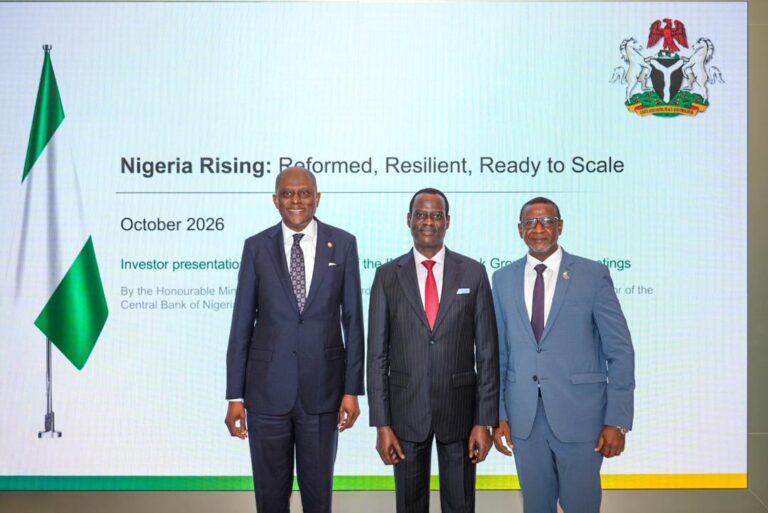
Finance Minister and Coordinating Minister of the Economy Taiwo Oyedele presented an optimistic outlook on the reforms so far. He highlighted the longer-term goal of bringing headline inflation and interest rates down to single digits by 2027, noting that the next phase of reforms will require closer coordination between federal and state governments.
Addressing the Council, Vice President Shettima stressed that economic reforms must ultimately be judged by their impact on people’s daily lives. He charged governors and relevant agencies to work toward affordable transportation, better healthcare, more employment opportunities, and greater financial security for Nigerians.
“The first dividend of prosperity should be the confidence to plan a life. Our task is to make such confidence less dependent on fortune,” Shettima said. He also emphasised that Nigeria’s federal structure should support, rather than hinder, the delivery of essential services, adding that “our separate jurisdictions must serve a common public interest.”
On transportation, the Vice President highlighted the National Compressed Natural Gas (CNG) Bus Initiative. He urged state governments to prioritise affordability and accessibility for commuters rather than simply measuring success by the number of vehicles deployed. “The cost of reaching a livelihood should never consume the livelihood itself,” he noted.
The meeting also covered other matters. Health Minister Prof. Muhammad Ali Pate briefed the Council on the reported Ebola situation in the Federal Capital Territory. He allayed fears of a major outbreak, outlined national response measures including point-of-entry detection, laboratory capacity, and strategic communication, and urged the remaining states that have not yet updated their preparedness plans to do so quickly.
Council received updates on polio eradication efforts and directed states to strengthen routine immunisation, release counterpart funds promptly, and improve coordination in hard-to-reach and insecure areas. On livestock development, members acknowledged the sector’s potential for job creation and economic growth and agreed to deepen collaboration between federal and state governments.
Finally, the Council approved the establishment of a joint financing framework between the Federal and State Governments to accelerate the rollout of CNG and electric vehicles. The goal is to ensure that lower operating costs for operators translate into reduced fares for passengers, rather than remaining only at the level of vehicle deployment. A committee will be set up to coordinate the financing arrangements and engage transport unions and operators.
Overall, the NEC meeting focused on moving from macroeconomic reforms to practical measures that can ease everyday pressures on Nigerian households in the short term, while maintaining longer-term targets around inflation, investment, and public service delivery.
About the Author