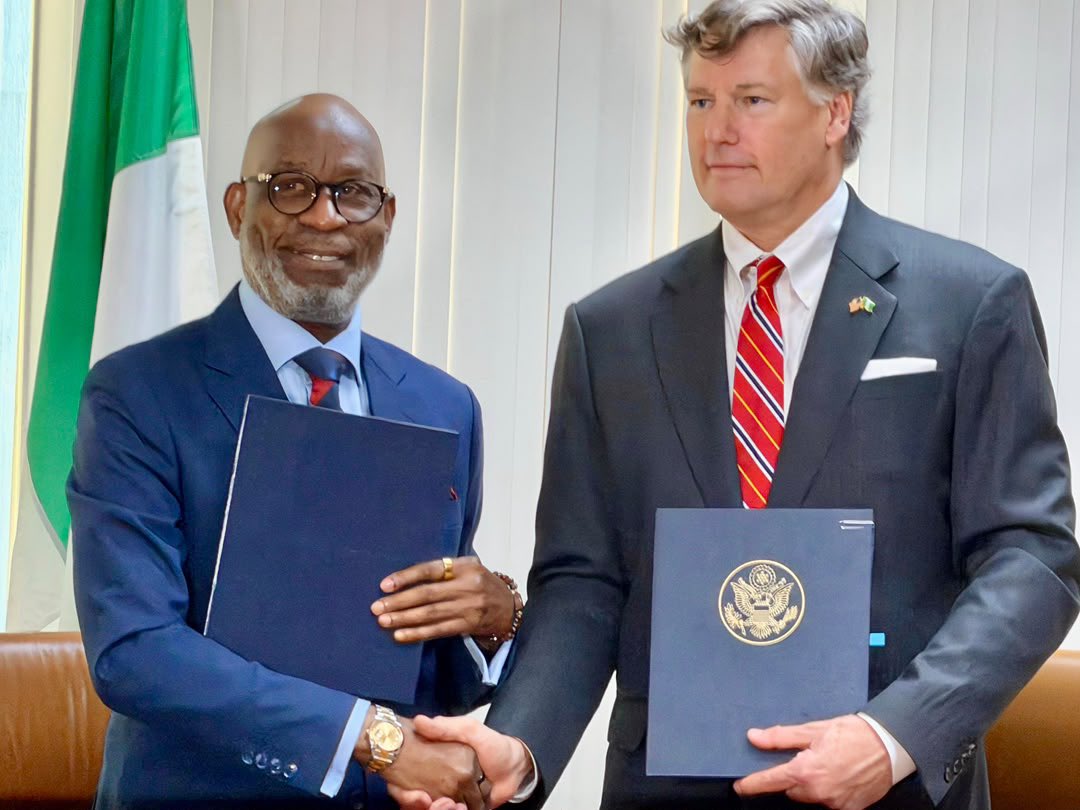
Nigeria and the United States signed a memorandum of understanding on Thursday at the Nigerian Mission House in New York, on the sidelines of the 81st United Nations General Assembly. The pact, signed by Minister of Solid Minerals Development Dele Alake and US Deputy Secretary of State Christopher Landau, is designed to deepen cooperation in Nigeria’s solid minerals sector and help unlock deposits whose potential value officials have long placed at around $700 billion.
The agreement is not a $700 billion investment cheque. That figure refers to the estimated in-ground value of Nigeria’s mineral endowment, which includes gold, lithium, iron ore, tin, columbite, limestone and other resources spread across more than 500 locations. Recent surveys have even cited a preliminary $750 billion estimate. The sector still contributes well under 2 per cent of GDP, leaving a large gap between geological potential and actual economic output.
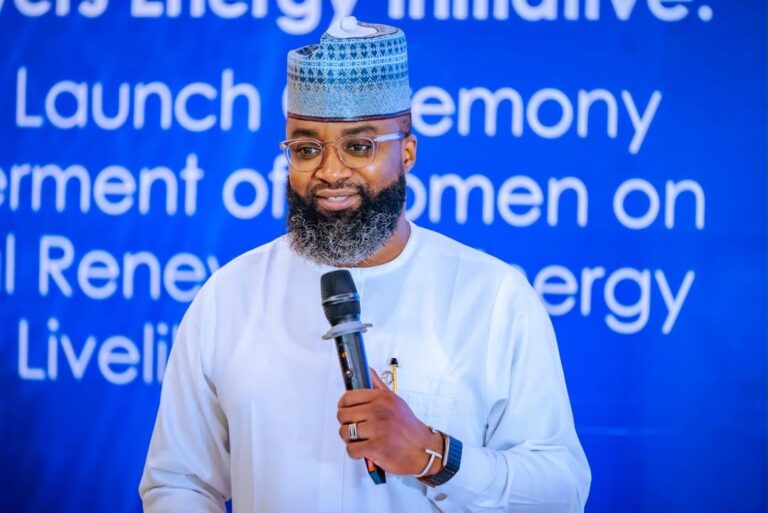
Alake described the document as a “future-driven framework” covering geological data and exploration, mineral development and processing, infrastructure and technical capacity. He was explicit about Nigeria’s intent: “We are not here to remain a source of raw material for the value that others create. Our goal is to turn potential into lasting value at home through stronger local processing, new skills, quality jobs, and new opportunities for Nigerian businesses.” He added that a signature is only a promise and that the next months must produce identifiable projects and commercial partnerships.
Landau called Nigeria a strategic partner and Africa’s most populous nation and a regional power. He said the United States wants to support Nigeria’s economic growth and that the two countries have achieved unusually close cooperation over the past year and a half under Presidents Donald Trump and Bola Tinubu. The framework is intended to use government-to-government relations as a platform for business-to-business deals rather than as an end in itself.
The signing occurred against a backdrop of deliberate policy change in Abuja. The Tinubu administration has revoked thousands of inactive licences, digitised the mining cadastre, required more local processing as a condition of new titles, and organised artisanal miners into cooperatives. Revenue from the sector has risen sharply, from roughly ₦6 billion in 2023 to more than ₦38 billion in 2024 and around ₦68–70 billion in 2025. Lithium processing plants are already under construction in Nasarawa and the Federal Capital Territory. Alake, who also chairs the Africa Minerals Strategy Group, has used the UNGA week to press a continental message: Africa should stop exporting raw ores and start building processing capacity at home.
For the United States the interest is equally practical. Washington is seeking more resilient supplies of critical minerals used in batteries, electronics and defence, and it is competing for access in a market where Chinese firms have already secured substantial positions. The New York document therefore sits at the intersection of Nigeria’s diversification drive and America’s supply-chain strategy.
Challenges remain obvious. Geological data is still incomplete in many states. Infrastructure, power and security constraints persist. Past mining agreements in Nigeria have sometimes produced more headlines than processing plants or community benefits. Public comments on the announcement quickly asked whether minerals will actually be refined in-country and what concrete returns Nigerians will see. Those questions are fair. An MoU creates a diplomatic and commercial pathway; it does not automatically deliver mines, smelters or jobs.If the framework is followed by bankable projects, technology transfer and enforceable local-content rules, it could help move Nigeria’s mining sector from a peripheral extractive activity toward a more industrial role.
About the Author