
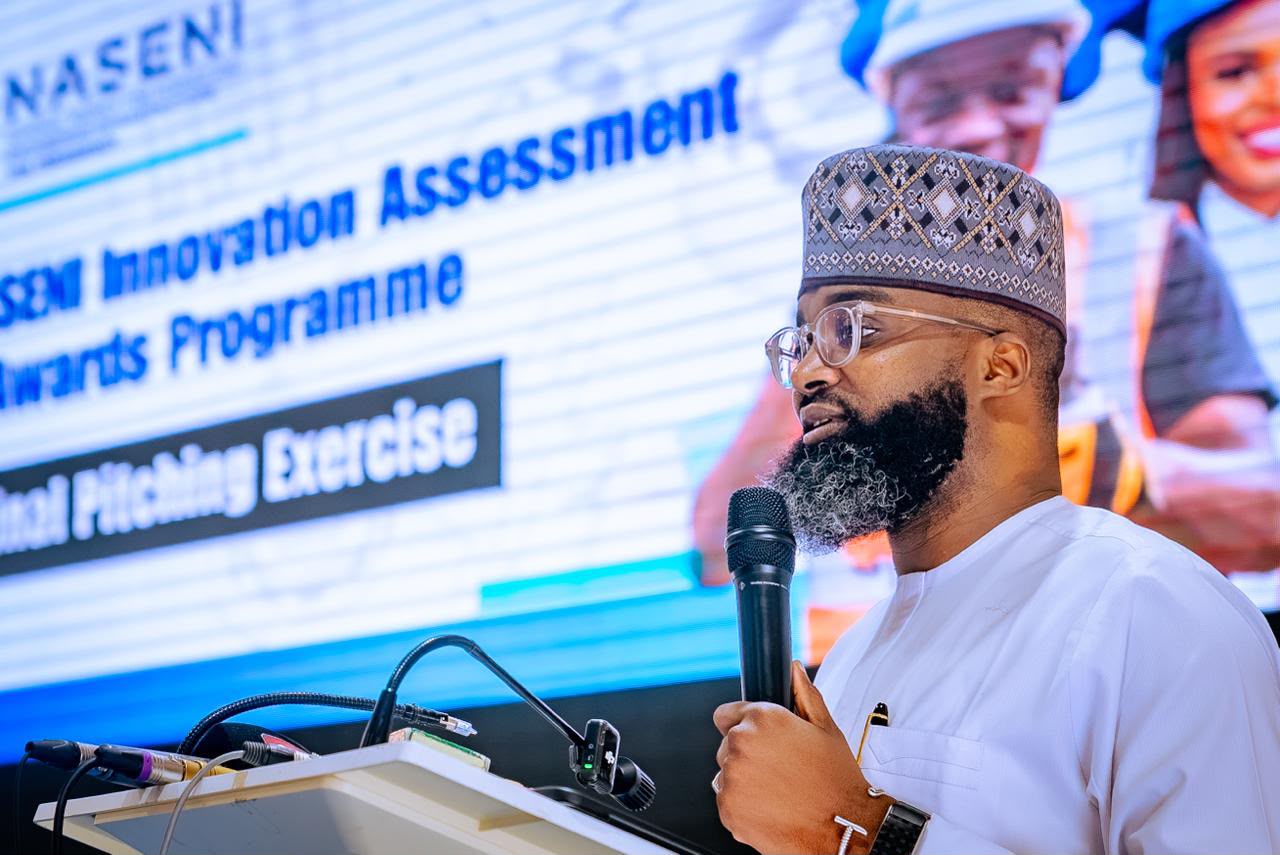
The National Agency for Science and Engineering Infrastructure (NASENI) is placing human capital development at the centre of its institutional transformation, Khalil Suleiman Halilu, the agency’s Executive Vice Chairman and CEO has stated, noting that the Agency’s most significant achievement is not the technology it has deployed, but the people it has empowered to use it.
Halilu said NASENI’s ongoing reform programme has deliberately combined digital transformation with extensive staff capacity building, creating a workforce increasingly equipped to operate in a modern, technology-driven public sector.
“Our greatest achievement at NASENI is empowering people to embrace change,” Halilu said.
According to him, NASENI made a deliberate decision that meaningful reform had to begin internally, leading the Agency to embark on an ambitious institutional modernisation programme anchored on digital transformation, capacity building, transparency and operational efficiency.
A major component of the reform has been the deployment of a comprehensive Enterprise Resource Planning (ERP) system across NASENI’s operations. The system has digitalised core functions including finance, procurement, human resources, administration, project management, approvals and document management.
But beyond the technology itself, Halilu said the Agency has invested significantly in ensuring that its workforce possesses the skills required to function effectively within the new digital environment.
According to the EVC, hundreds of NASENI employees have undergone digital training as part of the transformation programme, with digital tools now embedded across different levels of the organisation. “Even junior members of staff,” he noted, “now routinely use digital platforms to manage workflows, process requests, perform assigned responsibilities and access institutional information electronically.”
“Institutions do not transform because new software is installed — they transform when people begin to think differently, work differently and embrace the culture of performance,” Halilu said.
“At NASENI, our greatest achievement was not deploying an ERP system — it was empowering people who embraced change and became active participants in transformation.”
The emphasis on people is particularly significant as public institutions across Nigeria confront the challenge of modernising their operations while ensuring that employees are not left behind by rapidly evolving technologies.
Halilu said the successful implementation of the ERP system has also demonstrated the potential for technology to address some longstanding operational challenges within government.
According to him, slow processes, fragmented data, delays in approvals, excessive dependence on paperwork and limited visibility across operations can be substantially reduced through integrated digital systems.
Having implemented the system internally, NASENI is now seeking to extend its experience and technical capabilities to other parts of government.
Khalil Halilu used the platform to invite ministries, departments and agencies to partner with NASENI in adopting and deploying ERP solutions tailored to their respective operational requirements.
“I therefore wish to use this opportunity to invite ministries, departments, and agencies of government to partner with NASENI in adopting and deploying ERP solutions tailored to their operations,” he said.
About the Author